Natural Language Queries

Asking questions about synthetic data in plain English

The Natural Language Query Interface allows users to ask questions in plain English instead of writing complex database queries. The system understands intent, extracts filters, and returns relevant data with actionable insights.

This approach democratizes data access, allowing non-technical users to extract insights without needing advanced analytical skills.

Methodology

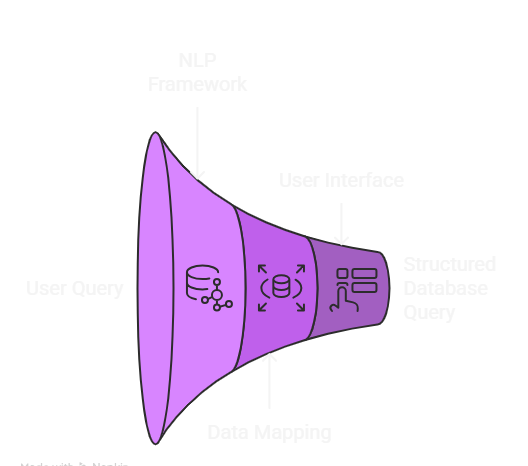
NLP Framework Development Process

NLP Framework

Develop an NLP framework that can interpret user queries and translate them into structured database queries.

Data Mapping

Ensure that the synthetic dataset is well-structured and indexed to facilitate efficient querying.

User Interface

Create an intuitive interface that allows users to input queries and receive understandable responses.
Example Queries

User Query
System Response
How many people in Westminster earn over £50k?
Population count with income breakdown
Compare diabetes risk between Camden and Hackney
Side-by-side risk comparison analysis
Generate 5,000 young professionals in Hackney
New synthetic population matching criteria
Export all high EV likelihood residents as CSV
Downloadable data file
Show health risks for retired residents
Filtered disease risk analysis
What % of renters will buy EVs by 2030?
Adoption forecast by housing type

Applications

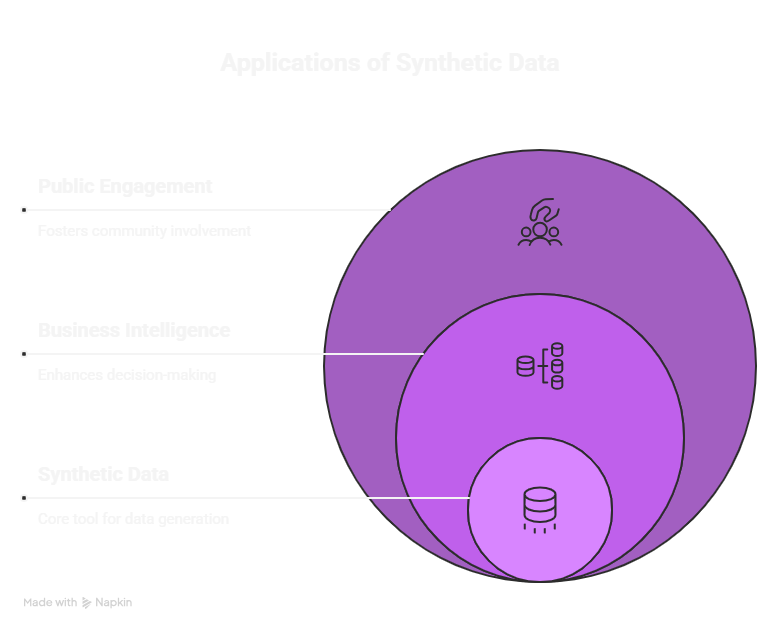
Synergy of Synthetic Data in Business and Public Engagement

Business Intelligence:

Enable business analysts to derive insights from synthetic data without relying on data scientists.

Public Engagement:

Allow citizens to ask questions about local demographics and health trends, fostering transparency and community involvement.

Need Help? We’ve Got Answers

Natural Language Queries allow you to interact with complex datasets using everyday English instead of technical code like SQL. The system uses advanced AI to interpret the "intent" behind your question, automatically translates it into a database query, and retrieves the relevant insights instantly.


No. The primary goal of NLQ is to democratize data access. It is designed specifically for non-technical stakeholders—such as policy makers, urban planners, or business managers—allowing them to ask questions like "Which London borough has the highest risk of diabetes?" without needing to understand the underlying database structure.


The system utilizes Semantic Parsing and Natural Language Understanding (NLU) to navigate nuances in language. If a query is broad, the AI looks for "correlated attributes" within the synthetic population to provide the most logically accurate answer. For example, it can distinguish between a request for the "total count" of a demographic versus the "percentage distribution" based on the context of your question.


Yes. Because the Natural Language Query engine is built on top of Synthetic Gen’s privacy-preserving datasets, any answer you receive is based on artificial, "look-alike" data. This means you can query sensitive topics—like health risks or financial status—and get high-fidelity insights without ever accessing or exposing real Personal Identifiable Information (PII).


While dashboards are great for viewing pre-set metrics, NLQ provides on-demand flexibility. Instead of waiting for a data analyst to build a new report, you can ask unique, ad-hoc questions and receive immediate visualizations or data tables. This removes the "data gatekeeper" bottleneck and significantly accelerates the decision-making process.

Progressive Machine Learning Solutions

The Epicenter of Machine
Learning Excellence