Health Risk Simulation

Modelling chronic disease incidence using demographic factors

Health risk simulation focuses on predicting the incidence of chronic diseases by analyzing demographic factors. This approach is vital for public health planning and resource allocation.

The Disease Risk module estimates the probability of three major chronic conditions for each synthetic individual: Type 2 Diabetes, Heart Disease, and Respiratory Conditions (asthma, COPD). This enables public health officials to identify high-risk areas and allocate healthcare resources effectively.

Methodology

Analyzing Chronic Disease Incidence

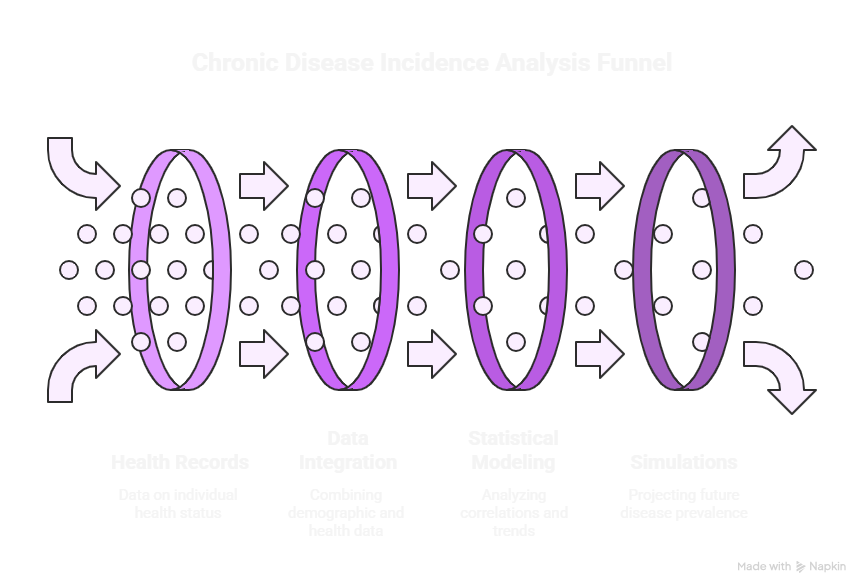
Data Integration:

Combine demographic data with health records to identify correlations between factors such as age, gender, and socio-economic status.

Statistical Modelling:

Utilize logistic regression and survival analysis to model the likelihood of chronic disease incidence based on demographic variables.

Simulation:

Run simulations to project future disease prevalence under various scenarios, such as changes in lifestyle or healthcare access.
Risk Calculation Model - Borough Environmental Profiles

Borough
Air Quality
Deprivation
Health Impact
Camden
Moderate
Low
Lower respiratory risk
Westminster
Poor (traffic)
Low
Higher respiratory risk
Hackney
Moderate
Higher
Higher diabetes/heart risk

Applications

Predictive Analysis In Health Risk Simulation

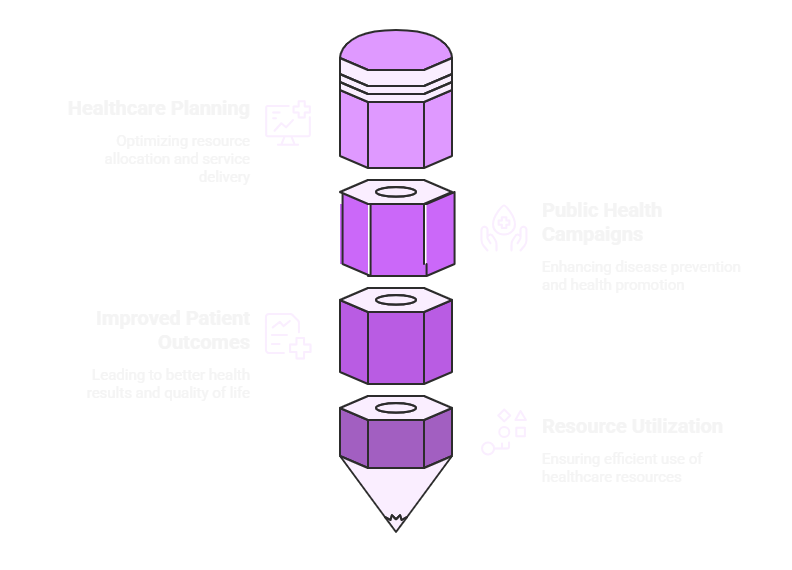
Healthcare Planning:

Assist healthcare providers in allocating resources and planning interventions based on predicted disease incidence.

Public Health Campaigns

Inform targeted health campaigns aimed at high-risk populations.
Need Help? We’ve Got Answers

The platform doesn't predict health for real individuals; instead, it uses AI to model how specific demographic factors—such as age, socioeconomic status, and geographic location—correlate with chronic disease incidence. By applying these correlations to a synthetic population, it simulates the likely prevalence of conditions like diabetes or cardiovascular disease within a specific London borough.


The simulation looks at a wide range of "correlated attributes" within the synthetic population, including housing conditions, employment status, income levels, and proximity to local services. These social determinants of health are then mapped against known clinical risk factors to create a high-fidelity map of public health risks.


Yes. The tool is specifically designed for "What-If" scenarios. For example, health planners can simulate the potential impact of introducing a new community wellness program or a low-emission zone in a specific neighborhood and see how the synthetic population's projected health risks might shift over time.


Because the simulations are run entirely on synthetic individuals rather than real patients, there is no risk of exposing sensitive medical records. This allows health researchers and local councils to analyze health trends and test policies in a fully GDPR-compliant environment without the legal delays of accessing private NHS or clinical data.


Absolutely. The synthetic populations used in the health simulations are validated against official census data and public health administrative records. This ensures that the simulated disease clusters and risk patterns accurately mirror the real-world distributions found in boroughs like Camden, Westminster, or Hackney.

Progressive Machine Learning Solutions

The Epicenter of Machine
Learning Excellence